Introduction
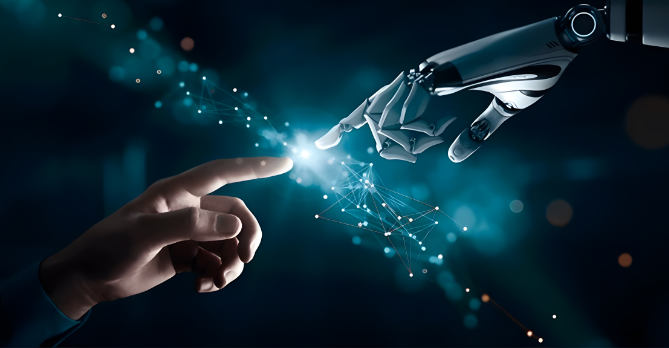
In today’s world, we are surrounded by information messages, images, sounds, and data flowing through human minds and digital systems. Whether it’s a person making a decision or a computer running a program, the process behind it is the same, turning raw data into meaningful understanding. This is known as information processing. It is something we do in our daily life, thinking, learning, communicating, and even creating art or technology. By exploring how humans and computers process information, we can better understand how information itself is collected, interpreted, and changing it to meaningful knowledge, an idea that forms the foundation of modern technologies like Artificial Intelligence (AI) and Machine Learning (ML).
Understanding Information Processing
Information processing can be described as the way data is collected, then organized, and then given meaning. In simple words, it is the transformation from raw data to meaningful information [10]. In computers, this happens through algorithms that transform input data into useful outputs. For humans, it’s the process of sensing, understanding, remembering, and using what we learn in daily life [1]. Before the digital age, information was stored and processed by hand, through books, records, and human memory. Today, this has evolved from magnetic tapes to hard drives, solid-state drives, and finally to cloud storage [10]. Yet the basic goal remains the same, storing and understanding data so we can make decisions.
This same concept appears in psychology, where human thinking is often compared to how computers process information [1]. We sense something through our eyes or ears, our brain processes and interprets it, and then we store it either temporarily or permanently. Just like computers have short-term and long-term storage, we too have sensory memory, short-term memory, and long-term memory [2].
Sensory memory briefly holds the things we see, hear, or feel. It’s like when you smell your favorite food or hear a familiar song, the information enters instantly but fades quickly. Short-term memory works when we’re doing something immediate, like remembering a phone number or watching a short video; it’s similar to a computer’s RAM, which holds information temporarily while it’s being used. Finally, long-term memory is where we store knowledge, skills, and habits we use often, like knowing your native language or how to ride a bicycle. This is like a computer’s hard drive, where data stays until we need it again [3]. When I thought about it deeply, I realized that information processing isn’t just something computers do; it’s something we do all the time. During the COVID-19 pandemic, for instance, scientists collected huge amounts of data, including infection rates, recovery numbers, and even blood samples, to understand immunity. By organizing and interpreting that data, they could find or develop vaccines. That whole process, from collecting numbers to creating meaning, is information processing. The same happens in daily life, for example When we learn a new language, we collect words and sounds as data, then give them meaning through use and communication [9]. Cooking works the same way; we gather information about ingredients and techniques, then process it to create a dish. Even playing music or drawing a picture involves collecting patterns, remembering them, and creating something new. Every one of these is, in its own way, a form of information processing [4].
From Human Thought to Artificial Intelligence
As humans built machines to imitate our ways of thinking, information processing evolved into a digital form. This is where Artificial Intelligence (AI) and Machine Learning (ML) come in [5]. AI is the broader idea of making computers perform tasks that usually need human intelligence, things like reasoning, recognizing speech or images, understanding language, or making decisions. Machine Learning, on the other hand, is a part of AI; it allows machines to learn from data without being told exactly what to do each time (6). A simple way to see the difference is through examples. Imagine a chatbot that follows fixed scripts; it uses AI, but not necessarily ML. But when YouTube recommends videos based on what you’ve already watched, that’s ML learning from your behavior. In short, all ML is AI, but not all AI is ML. AI is the brain, ML is one of its learning methods [7]. The rise of AI and ML has transformed how information is processed today. Instead of humans sorting through data manually, algorithms can now analyze millions of records in seconds. For example, AI systems were used during the COVID-19 pandemic to predict virus spread, detect infections in X-rays, and identify patterns humans might miss [8].
Consideration
When I think about information processing, I see it as very similar things, how humans think and how computers work. Both systems take in data, process it, and produce meaning. However, there’s an important difference: humans act on that meaning, while computers do not. A computer can organize and analyze data to create useful information, but it simply follows instructions. It doesn’t decide anything but only processes it. Humans, on the other hand, use that information to make choices, express emotions, and create new ideas. That’s what makes our way of processing information deeply human. It’s also important to remember that not all data leads to truth. Sometimes information can be incomplete or biased, and the meaning we give to it depends on how we interpret it. Whether we’re scientists studying diseases, artists creating visuals, or programmers building AI, we all are collecting data, processing it, and trying to create and meaning out of it.
References
[1] Simply Psychology, “Information Processing Theory,” Simply Psychology, 2024.
https://www.simplypsychology.org/information-processing.html
[2] Nova Southeastern University, “Information Processing Models of Human Learning,” Nova
Southeastern University, 2023.
https://nsuworks.nova.edu/cgi/viewcontent.cgi?article=1088&context=edp
[3] G. A. Miller, “The magical number seven, plus or minus two: Some limits on our capacity for
processing information,” Psychological Review, vol. 63, no. 2, pp. 81–97, 1956.
[4] Research.com, “What Is Information Processing Theory?” Research.com, 2024.
https://research.com/education/what-is-information-processing-theory
[5] C. Stryker and E. Kavlakoglu, “What is artificial intelligence (AI)?,” IBM, Aug. 09, 2024. https://www.ibm.com/think/topics/artificial-intelligence
[6] Google Cloud, “Artificial Intelligence vs. Machine Learning,” Google Cloud, 2024.
https://cloud.google.com/learn/artificial-intelligence-vs-machine-learning
[7] Microsoft Azure, “Artificial Intelligence vs. Machine Learning: Understanding the Difference,”
Microsoft Azure, 2024. https://azure.microsoft.com/en-us/resources/cloud-computing-dictionary/artificial-intelligence-vs-machine-learning
[8] A. Vaishya, M. Javaid, I. H. Khan, and A. Haleem, “Artificial intelligence (AI) applications for
COVID-19 pandemic,” Diabetes & Metabolic Syndrome: Clinical Research & Reviews, vol. 14,
no. 4, pp. 337–339, 2020. [Online]. Available:
https://www.sciencedirect.com/science/article/pii/S1871402120300771?utm_source
[9] M. J. Srivastava and V. Srivastava, “Information Processing Theory in Language Learning among Students,” Jun. 01, 2019. https://www.researchgate.net/publication/380151303_Information_Processing_Theory_in_Language_Learning_among_Students
[10] Miyazaki International University Moodle: Log in to the site,” Miyazaki-mic.ac.jp, 2025. https://portfolio.miyazaki-mic.ac.jp/moodle/pluginfile.php/23861/mod_resource/content/0/Lesson%2001.pdf
About Author
