
Introduction
People living in modern society have been given a variety of labels such as information society, and social polarization. Especially, the label of “surveillance society” has been increasingly paid attention because the internet and digital technology rapidly spread all over the world. Nowadays, surveillance through security cameras, cashless payments, and location applications has entered our daily lives. Although these technologies promote our safety and convenience, they have a potential to damage individual freedom and privacy.
David Lyon [1], who is a sociologist in surveillance studies, makes clear that surveillance is “all actions of collecting and processing personal data for the purpose of controlling behaviours”, focusing on the target is personal data rather than human beings themselves. From his perspectives, surveillance society can be described as a society where states or companies use those data for running society effectively.
Thus, this paper will study the information privacy problems through my number card system as an example of a surveillance society in Japan.
My Number Card System and Information Management
My number card system, which started completely in 2016, provides 12 numbers to each citizen and aims to promote administrative processes such as tax, social security, and disasters efficiently [2]. In other words, my number card system is expected to decrease individuals’ stress and make the administrative process easier by integrating information managed by separated institutions.
However, this system’s convenience leads to anxiety. As my number card system connects with a large amount of personal information, it can create a system in which the state can control our data. Therefore, If this system is used by the government or outsiders illegally, all of individuals’ lives are under surveillance situation. For example, if the data such as tax, pension information, medical history, income, and behaviour patterns are linked, we could guess someone’s economic situation, physical condition, and lifestyle patterns. This information can become a foundation for illegal actions that damage human equality.
In addition, my number card system recently integrated not only with administrative services, but also with banks and private companies, or hospitals. It becomes difficult for us to know what kinds of data are being collected, who has access to it, and how it is processed and analyzed. The loss of public management in terms of data usage leads to our skepticism, feeling against the system. Especially, every time we have doubts such as “is it really safe?” and “isn’t surveillance getting stronger?” through leaks and scandals of our data are reported.
Therefore, although my number card system becomes a symbol of convenience, it asks us how much of our freedom and our privacy we are willing to submit for convenience.
Cashless Payment and Promoting Surveillance
Recently, cashless payments have rapidly become popular in Japan. While Japan’s cashless payment ratio (2020) was low at 18.4% in 2015, it increased significantly to 26.8% by 2019 [3]. The government is promoting cashless payments from the perspective of economic growth and improved convenience, making QR code payments and electronic money common even in everyday shopping.
One of the advantages of cashless payments include decreasing burdens of cash management, promoting sanitation, and crime prevention. In China (2018), mobile payments through smartphones have become increasingly adopted with 76.9% of adults in 2017 [4]. This convenience brings significant benefits to daily life.
On the other hand, cashless payments promote the exchange of personal information. Payment histories present detailed lifestyle data such as what was purchased, when, and where, and analyzing this data allows us to guess an individual’s financial situation, health status, and action patterns. In other words, users are exchanging convenience for providing their personal lifestyle information to corporations and governments.
In addition, anxiety has been increased about the lack of clarity regarding what information is collected and who manages it. While regulations exist under the personal Information protection law, deep anxiety among consumers still remains regarding information leaks and illegal use. Furthermore, risks have been pointed out that the system could lead to the loss of payment methods, damaging daily life when system failure or diseases.
Thus, cashless payments include the risk of surveillance. As Japan moves toward a cashless society, each of us must ask ourselves the question of how to define the boundary between convenience and surveillance.
Problems of Surveillance Society
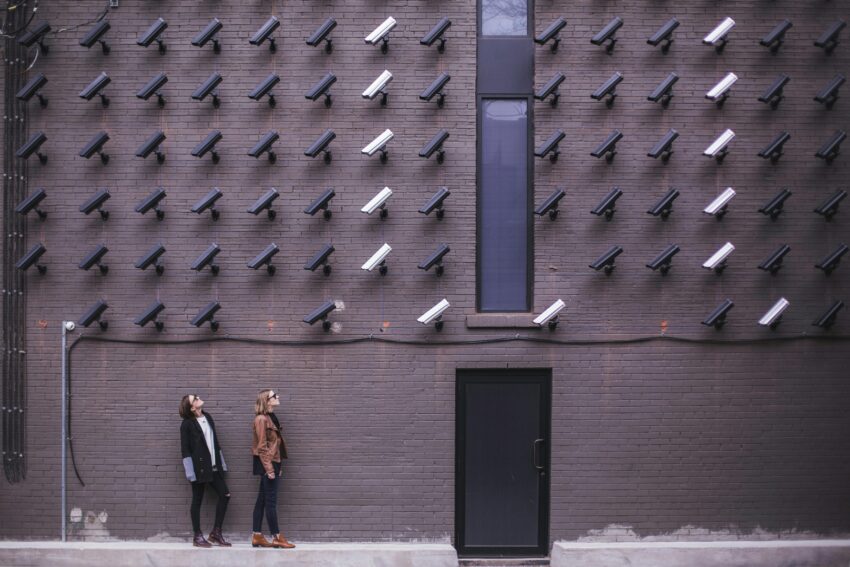
Advantages in surveillance technology have positive aspects such as improvement of convenience and prevention for crime. However, serious problems which surveillance society has have appeared. The first major problem is a risk of privacy. Once surveillance data is collected and used without individuals’ permission, we lose control with our information. For example, if surveillance cameras are installed in public spaces without permission, the portrait rights can be ignored. Furthermore, there is a possibility that collected data could be used for illegal actions.
In addition, there is a risk of causing discrimination. For example, individuals who seemed dangerous through data analysis could be discriminated against for access rights and opportunities in society, even if they have done nothing wrong. Such systems make a clear line between people who choose and people who cannot be chosen become increasingly, making discrimination and gap stronger.
There is another risk that without enough discussion about the purpose of surveillance increase, monitoring and controlling risks become natural situations before we realize. We tend to accept surveillance through services for reasons of security and convenience. In other words, our desire for peace of mind leads to the strong surveillance systems we want to avoid being monitored and controlled.
Considerations
This paper studies how promoting convenience by using My Number Card system and cashless payments, can make surveillance society strong. While these technologies make life more comfortable, they require personal information for the states or companies with the problem such as convenience and freedom. Especially, everyday behavioral data collected and analyzed have the potential surveillance of people’s lifestyle.
Moreover, surveillance expands without notice under the convenience, including the risk that we ourselves become ignorant of our freedom. Therefore, we must consider how our information is controlled and require responsibilities and openness from governments and institutions.
References
[1] D. Lyon, “Surveillance Studies: An Overview” Cambridge, UK, 2007
[2] Ministry of Internal Affairs and Communications, “Basic Information on My Number Card” Tokyo, Japan: Local Administration Bureau, (元)全国市長会支部総会御説明資料, accessed on 2025/ 11/ 25
[3] Ministry of Economy, “Review of the First Discussion, Japan’ s Cashless Payment Ratio, and Disclosure by Payment Service Providers and the Government”, in Materials for the 2nd Meeting on Environmental Development for Further Promotion of Cashless Payments in Small and Medium-Sized Retailers, https://www.meti.go.jp/press/2020/06/20200626014/20200626014-3.pdf, accessed on 2025/ 11/25
[4] The State Council of the People’s Republic of China, “Notice of the State Council on Issuing the Planning Outline for the Construction of the Social Credit System” 2014, http://www.gov.cn/ xinwen/2018-08/13/5313588/files/fbc2608a76044f459b18e8dca58bf823.pdf, accessed on 2025/ 11/ 25
About Author
